Mental Model · Behaviour & Cognitive Bias · Decision & Risk · Leadership & Motivation
Agency (High / Low)
A practical lens for how people approach problems: low-agency waits for circumstances; high-agency creates options and moves first.
After Common usage; rooted in psychology’s locus-of-control and learned-helplessness research
“Agency” describes the felt ability to initiate action and influence outcomes.
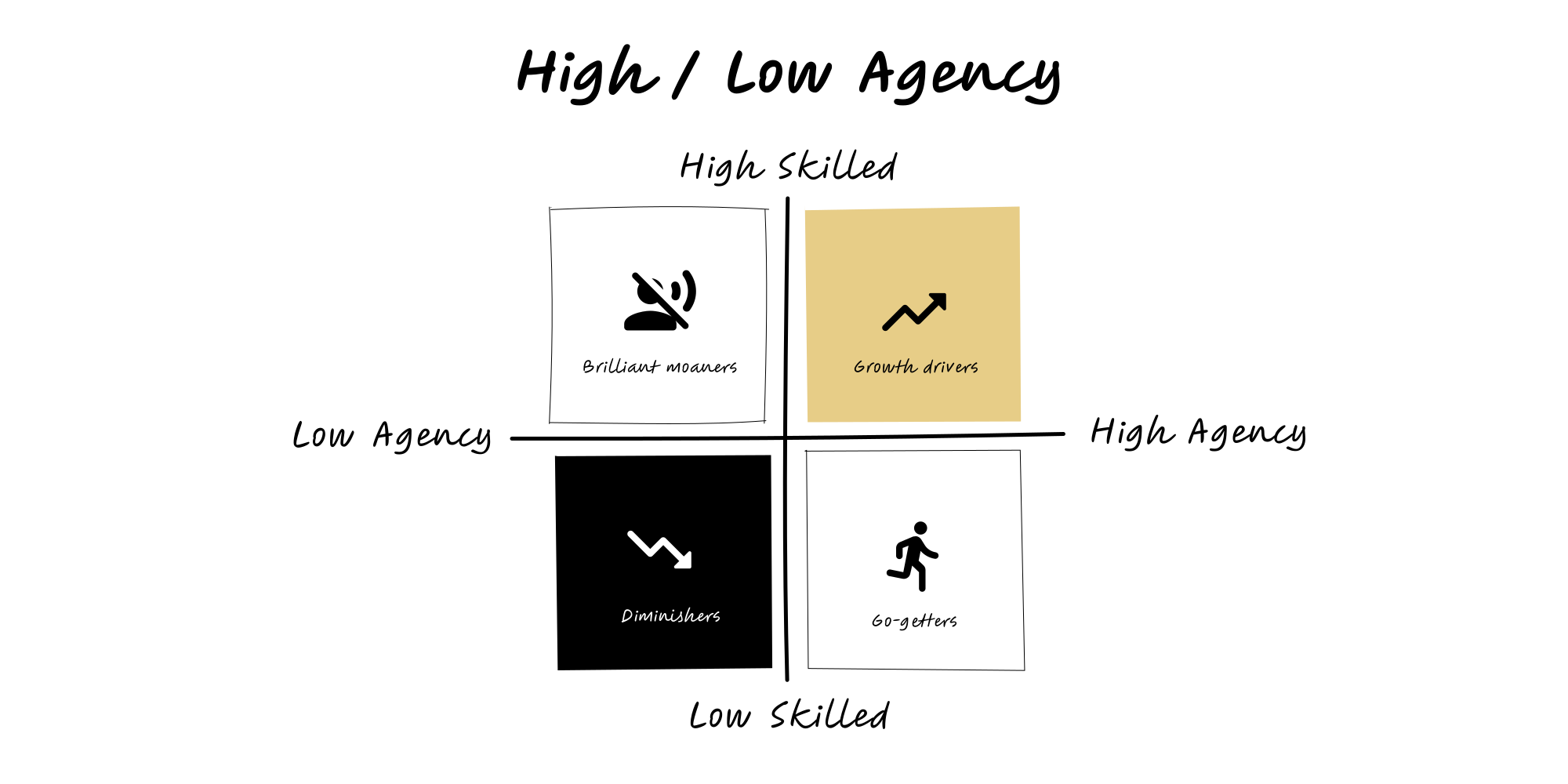
How it works
Low-agency: asks for permission first, cites blockers, reports problems without proposals, timeboxes to tasks not outcomes.
High-agency: reframes constraints, drafts a plan, runs small tests, seeks feedback after moving, owns results.
Use-cases
Hiring and promotion – screen for evidence of self-started initiatives and constraint-busting.
Turnarounds – prioritise leaders who create options under uncertainty.
Product and ops – bias to small experiments over lengthy alignment cycles.
Personal productivity – shift from “what is allowed” to “what would it take”.
Step-by-step
Define outcome in terms of user or business result, not activity.
List constraints; mark which are real vs policy habits.
Design a reversible test you can run this week; set success criteria.
Act and surface learning; escalate only with options, not problems.
Institutionalise wins into run-books; retire rules that no longer reduce risk.
Pitfalls & Cautions
Recklessness: high-agency is not ignoring guardrails; use reversible bets.
Hero culture: celebrate systems that raise team agency, not lone saviours.
Blame framing: low-agency often reflects incentives and process debt; fix context, not people slogans.